
The Six O’Clock Show, 15 October 2026
Hake Kiev with garlic butter and creamy mash
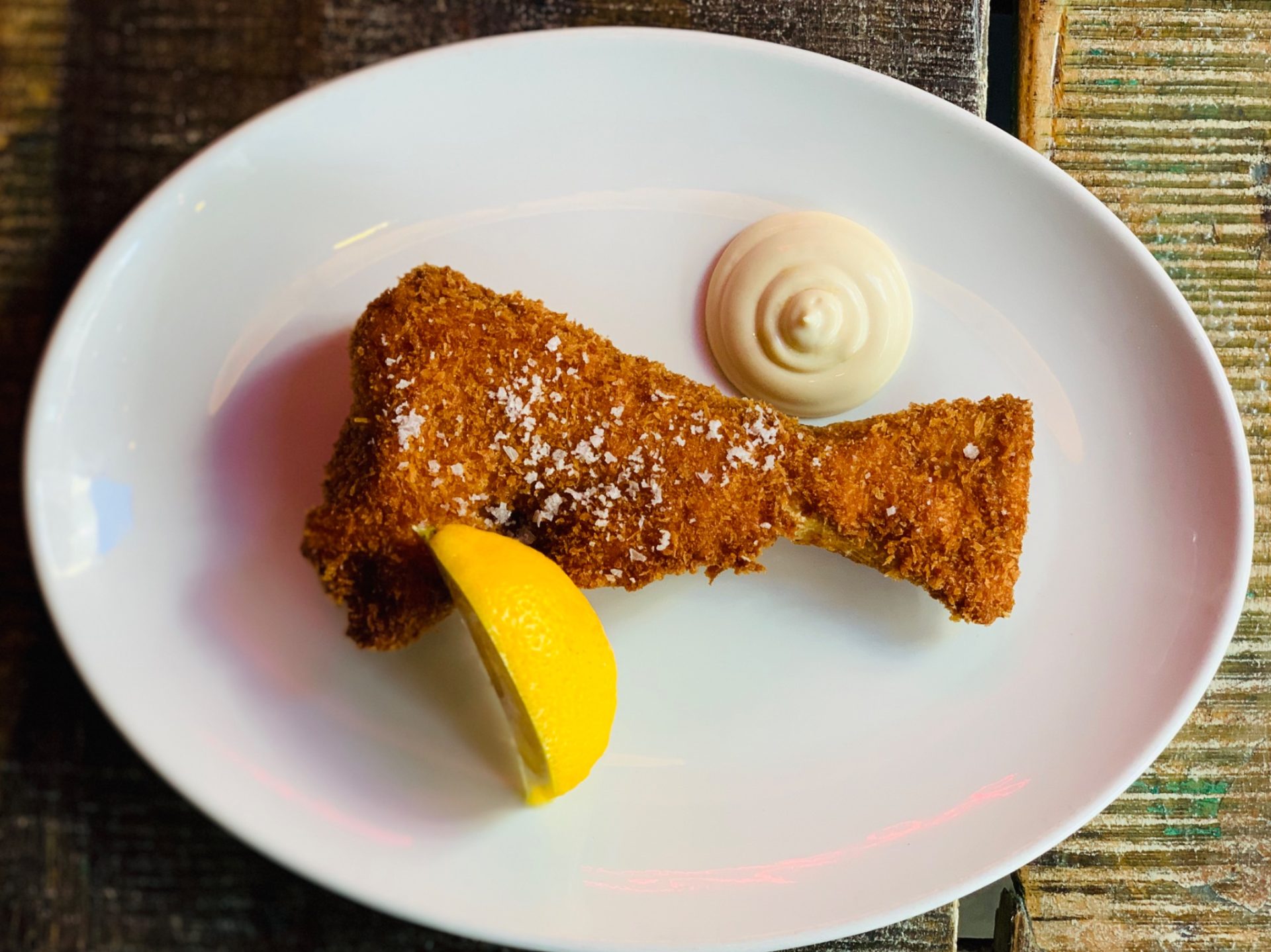
Our fish Kiev, with a crisp crumb and garlic butter at the centre.
Serves 2 • Prep 25 minutes, plus chilling • Cooking approximately 25–30 minutes
The original Seafood Café fish Kiev, using the tail of the fish.
The story behind the dish
We’ve been making fish Kievs for years, going right back to The Seafood Café in Temple Bar. Originally, we made them using tail portions of fish. It was part of our whole-fish philosophy: finding delicious ways to use every part of the fish and minimise waste. The original Kiev even retained a distinctive fish-tail shape.
Over the years, the dish has evolved. We now use a lovely thick loin of hake, filled with homemade garlic and parsley butter, double-breadcrumbed and fried until beautifully golden and crisp. It has also become a firm favourite at Salty Buoy. Today we’re serving it with rich, creamy mash: cut through the crisp crust and the melted garlic butter should flow out over the fish and potatoes.
Ingredients
- Hake Kiev and garlic butter
- 2 thick skinless hake loins, 180–200g each
- 100g softened salted butter
- 3 garlic cloves, finely crushed
- 2 tbsp flat-leaf parsley, finely chopped
- Zest of ½ lemon and a small squeeze of juice
- Fine sea salt and freshly ground black pepper
- Neutral oil for frying
- Double pané
- 100g plain flour
- 2 eggs, beaten
- 150g panko breadcrumbs
- Creamy mashed potatoes
- 500g floury potatoes, such as Rooster
- 75g butter
- 100ml warm whole milk or cream
- Sea salt and white pepper
Method
1. Garlic butter
Mix softened butter with garlic, parsley, lemon zest, a little lemon juice and black pepper. Roll into a sausage in cling film and chill until firm. Divide into two portions; very cold or lightly frozen butter is easiest to insert.
2. Stuff, season and shape the hake
With a sharp, narrow knife, make a small incision into the thick end of each loin. Carefully create a pocket inside without piercing the sides or bottom. Lightly season the outside and inside of the pocket with fine sea salt. Push the chilled butter deep into the centre and gently close the opening.
Optional chef’s finish: tightly roll each stuffed loin in cling film to make a neat, uniform cylinder, without crushing the flesh. Chill for 30–45 minutes, unwrap and gently pat dry. This step is not essential at home, but gives a more consistent, restaurant-style presentation.
3. Double pané
Arrange seasoned flour, beaten egg and panko in separate bowls. Coat each stuffed loin in flour, then egg, then crumbs. Dip back into egg and finally breadcrumbs again. Make sure the opening is fully coated. Refrigerate for 15–20 minutes to set the crust.
4. Fry and finish
Heat neutral oil to 170–175°C in a deep fryer or suitable heavy-based pan. Fry carefully until evenly golden and crisp, approximately 4–6 minutes depending on thickness and oil depth. For particularly thick portions, transfer to a 180°C oven to finish cooking. Check that the centre of the fish is cooked through; Use a food probe in the thickest fish flesh, away from the butter pocket, and follow your fishmonger’s cooking instructions. Rest briefly on a wire rack.
5. Creamy mash
Peel and evenly cut the potatoes. Start in cold salted water and simmer until completely tender. Drain and steam-dry, then pass through a ricer or fine sieve. While hot, fold in butter and enough warm milk or cream for a silky consistency. Season with salt and white pepper; avoid overworking.
6. Plate and serve
Spoon a generous helping of creamy mash onto warm plates and place a crisp hake Kiev on top. Finish with chopped parsley if desired. Serve immediately and cut through the middle so the garlic and parsley butter flows into the mash.
Chef’s notes
Choose thick centre-cut loins: thin tail portions are part of the original story, but are harder to pocket and stuff for this version.
Cold butter is crucial; do not overfill or allow the knife to pierce the fish.
Cling-film shaping is optional and improves uniformity, but does not itself seal the pocket. Remove every trace of cling film before breading or cooking.
Double pané gives a crisp crust and helps retain the butter. Chill the coating before frying.
Frying times vary with portion thickness. Colour alone is not proof the fish is cooked.